Monday, 25 July 2011

Tombstones and Banana Trees: A True Story of Revolutionary Forgiveness

It is time for a FIRST Wild Card Tour book review! If you wish to join the FIRST blog alliance, just click the button. We are a group of reviewers who tour Christian books. A Wild Card post includes a brief bio of the author and a full chapter from each book toured. The reason it is called a FIRST Wild Card Tour is that you never know if the book will be fiction, non~fiction, for young, or for old...or for somewhere in between! Enjoy your free peek into the book!

You never know when I might play a wild card on you!


Today's Wild Card author is:


and the book:


Tombstones and Banana Trees

David C. Cook (July 1, 2011)

***Special thanks to Audra Jennings, The B&B Media Group, for sending me a review copy.***

ABOUT THE AUTHOR:


Medad Birungi grew up in the war-torn country of Uganda in the 1960’s. He was born to a hateful father. And, after years of abuse, his father abandoned him, along with his mother and siblings, on the side of the road when he was only six years old. His life became increasingly difficult—his poverty increased, his hope evaporated and his future was nothing but decay. For the first twenty years of his life, he lived on a staple diet of anger and bitterness.

But God had his hand on Birungi’s life, and it would change beyond all recognition. Everything that was made ugly by pain and anger was turned to beauty by one incredibly simple yet revolutionary act: forgiveness. Though he started as a boy who begged to die by the side of the road, becoming a teenager angry enough to kill then a man broken and searching, he is now a testimony to God’s transforming power.

Currently Birungi is the coordinator for missions, evangelism and church planting in the Anglican Diocese of Kampala. He also lectures at the Kyambogo University. But one of his greatest passions is the charitable organization that he founded, World Shine Ministries. He is a father of nine children (five biological and four adopted). He and his wife Connie live with their children in Uganda.

Visit the author's website.

SHORT BOOK DESCRIPTION:

A Revolution of Forgiveness

Medad Birungi faced pain few imagine yet speaks of forgiveness all can experience

“My story changed beyond all recognition. Everything that was made ugly by pain and anger was turned to beauty by one simple, revolutionary thing—forgiveness.” Medad Birungi was once a boy who begged to die by the side of the road, a teenager angry enough to kill, a man broken and searching, yet today he is a testimony to God’s transforming power. In his life story, Tombstones and Banana Trees: A True Story of Revolutionary Forgiveness, Birungi charts his outrageous journey through suffering, abuse, despair and revenge to unexpected forgiveness and healing.


Birungi grew up with a violent father in the war-torn country of Uganda in the 1960’s. His childhood was scarred by extreme poverty, cruel suffering and unbearable sorrow that few of us can even imagine. Yet from that trauma came the lessons that we can all appreciate: the impoverishment of life without Christ, the redemption of the cross and the revolutionary power of forgiveness. His story deals in nothing less than pure, God-given transformation. Tombstones and Banana Trees has the dual quality of being both uniquely individual yet universally relevant, holding together the grandest of themes and the most intimate of testimonies. Birungi’s life is so comprehensively renewed that any reader sharing in his journey will feel the impact.

Through his story of healing, Birungi calls readers to find healing for their own emotional scars. He reminds them that when they forgive others they are doing something truly radical—changing relationships, communities and countries. They are welcoming God into the hidden corners of the human soul, where real revolution begins, inspiring others to start again and work for reconciliation. Birungi is “fascinated by forgiveness, drawn to it, compelled by it and delighted when anyone wants to join me. That is what revolutionary forgiveness becomes after a while—a passion. It draws us in, yet it does not overrule us. We must still make the choice to overcome our reservations.”

Tombstones and Banana Trees will take readers back to their own tombs and funerals and help them ask how God might turn them into new births and celebrations. Their eyes will be opened to the revolutionary change that God Himself has in store for all.


Product Details:

List Price: $14.99
Paperback: 208 pages
Publisher: David C. Cook (July 1, 2011)
Language: English
ISBN-10: 0781405025
ISBN-13: 978-0781405027

AND NOW...THE FIRST CHAPTER:


The Power of the Family


Life is good and I laugh a lot. You need to know that about me before we make a start. You need to know that I think of myself as being blessed with so much of God’s grace—far more than I deserve.

You need to know that as I look at my life I see there is much that is beautiful and much that is good. You need to know all this because what comes next will probably remove the smile from your eyes.

This is a book about revolutionary forgiveness. And in order to write about forgiveness, you must have something to forgive. For there to be change, you must have something to leave behind. In order to know healing, you must first have received a wound.

I did not think I would ever experience such sorrow or despair as the day my father beat me down from the pickup trucks and abandoned us—my mother, my sisters, my brothers, and me—by the side of the road at Kashumuruzi. We had no food, no possessions, and no hope of a future. All we had was the smell of diesel from the aging pickup trucks loaded with possessions, retreating down the road possessions that, just minutes previously, had been our own.

All we could hear was the sound of rejoicing that came from the hands and mouths of the rest of my father’s wives and their children as they jeered from the trucks. All we could see were the villagers

slowly peeling away from the scene and returning to their tasks, now that the drama that had entertained them was over. All I knew was that my mother, my sisters, my brothers, and I were weeping into the dirt, hoping life would end soon.

I did not think life would ever get worse than this. I did not think there was worse to come.

Yet there was. Far worse. But those are other stories for later pages. Right now I need to explain about the road and the pickup trucks, and in order to do that, I must tell you about that day.

It had started the way many mornings did. I woke up to the sound of singing carried in and out of my home on the wind, like sunlight playing in and out of the clouds. The music was coming from the church or the school on the other side of the valley. They always started early. I had never really belonged to either of them.

I was a typical six-year-old boy from a typical village in western Uganda. I had no need for shoes, was naked from the waist down, and was beginning to be aware of making the transition from infant to child. That meant I was becoming more adventurous, starting to move away from the compound where we lived, and finding out what was on offer in the land that surrounded it. Out beyond the pressed, swept earth, I was learning how to use my hands to make things out of the broad leaves of the banana trees that flooded the valley where we lived. I would use the broadest, thickest ones as mats on which I would sledge down the muddied slopes toward the stream. The rocks added the element of danger, and our scarred and bruised buttocks were the scorecards, clearly showing how often our games ended in pain. Thinner leaves I would use to make slippers for my feet. They only ever lasted a day, but I felt like a man when I wore them.

I was getting stronger. That meant I was starting to join in with the older children in the twice-daily trips down to the stream to collect water. My clay pot was small, but even five liters was heavy enough to make the task of carrying it a challenge. Especially when there were consequences to arriving back at home with a less-thankfull load.

Our home was halfway up a steep hill at the north end of a wide open valley. Two generations ago there had been nothing in the area but forest; a sprawling forest that, if you saw it from the other side of the valley, looked like an ocean churned up by a storm. Up close you could see that the sides of the steep hills had created land at the bottom that was dark, musty, and alive with insects that fed on the rotting vegetation. That is what our village is called: Rwanjogori. It means maggots.

Why would anyone want to live in a place like this? Ask my grandfather—he was the one who first settled here, clearing back the forest and building the first home halfway up the hill away from the maggots that ruled the earth at the bottom. He had discovered it when he was looking for places to hide the cattle he stole from distant farms. He was the son of Bukumuura, son of Karumuna, of Bituura, of Ruhiiga, of Ngirane, of Kasigi, of Muntu. Every one of these men was a renowned polygamist, especially Ruhiiga, who had thirty-six wives. My grandfather’s name was Kasabaraara—and it means “one who grinds people who sleep in your house.” Yes, my grandfather was given the name of a killer and became a professional thief who colonized a land in which nobody would have dreamed of living. They say it is hard to get a clean bird from a dirty nest, that true change is difficult when you come from a difficult family background. I know there have been times in my life when I have wished the maggots would return and consume me for themselves.

The day my father abandoned us had started typically. The sound of children singing, cups of millet porridge to drink, a quick trip down the hill to collect the water that flowed out of the ground

when you poked it with a stick. But after that things changed. It was moving day, and we were leaving Rwanjogori forever.Or so we thought.

My father had been friendly ever since he had returned home after his year-and-a-half disappearance—which itself is another story that we will get to in good time. Of course, his warm smiles and happy chatter could not fool us, and we remained suspicious—even six-year-old me. But my father was full of talk of great plans and big changes, all told with wide eyes and grand gestures made by hands

that commanded the air. It did not take long for him to convince us that our overcrowding was a problem for which he had the perfect solution.

In Uganda, as in much of Africa, a home is made up of three elements: your house, the area immediately around it—often called your compound—and the land that you farm. My father owned a

large slice of land that ran down from the top of the hill, flowing through to the valley below as it flattened out. His father had planted hundreds of banana trees, some with black trunks that offered

matoke, or plantain, as you might call it—a savory type of banana high in carbohydrates, cooked and served with a groundnut sauce or red beans. The green-trunked banana trees grow smaller fruit, but

these little bananas are sweet and delicious. You have never tasted a real banana until you have pulled a handful from a tree and allowed their sugary sweetness to delight your taste buds.

Our house was made of mud that had been stuck onto a sturdy wooden frame. The walls were thick and the roof was thatched with dried grass from a nearby marsh. Because my mother was my father’s first wife, our house was the biggest, with three rooms: a bedroom for my parents, another for my sisters, and a main living area in which my brothers and I slept and where we all ate when it was too wet or cold outside.

Our compound stretched around our house, and in it could be found our goats, maybe the odd cow, a dog or two, as well as the charcoal fire where my mother would cook. The earth was hard and dark, flattened by the feet of so many people living there. A few meters along from our house was another, slightly smaller. In it were my father’s second wife and their children. Farther on still was another house and another wife and more children. And then another.

You could call our overcrowding a form of domestic congestion or an “overextended family,” but whichever words you use, the truth was simple: My father had taken too many wives. My mother was his first, but as his anger rose along with his drinking, so too did the number of wives. In one year he married five other women, and by the end of his life he had fathered a total of thirty-two children: twenty-six girls and six boys. So, yes, there were too many of us. Too many wives fighting for his attention, too many children desperate for a father, too many mouths left hungry by too little land. “I know how our poverty will be wiped clean,” said my father one day. On his travels away from us he had found a large piece of land, two hundred miles west, where we could all live in plenty. Each wife would have five acres of land, more than enough to feed us and keep hunger away.

So he had sold our home and the land we had been squeezed into. On the morning of our planned departure, every able body was loaded up with possessions and sent off down the hill, past the spring, through the banana trees, and out onto the valley bottom, passing by the unmarked boundary that signaled the edge of my father’s land. Once out on the valley floor we then carried our sleeping mats, cooking pots, animal skins, water jars, and low tables down the track for another mile to the village of Kashumuruzi.

Kashumuruzi was an exciting place. It was the link with the outside world. Where Rwanjogori was home to only a few families and nothing else, Kashumuruzi was different. Not only did it have a trading post—a shop that sold everything from home-brewed beer to pots and cloth—but its houses and compounds were all stuck on one side of a main road that, in one direction, ran to the distant local capital of Kabale, while the other way pointed to the waterfall of Kisiizi and, beyond that, the new land my father was taking us to.

At this time in my life I was not poor. True, all those extra wives and children had put a strain on our resources, so the move was something we all welcomed, even if we did so cautiously. But my father was a dealer in animal skins, and he was good at his job. He was a charismatic, attractive man. People listened when he spoke and readied themselves to follow when he led. We had status.

So there we were, sitting at the side of the road, our possessions piled high beneath the tall tree that gave a little shade in the gathering heat. It was a big day in the life of the local villages, and as the trucks arrived, so too did a small crowd of onlookers. My father spoke to the drivers as soon as they arrived, gave them instructions about where we were going and how to load the possessions. This was a side of him I had not seen much of before: commanding authority from other adults who seemed to lower their eyes and obey him quickly. I was used to seeing my siblings or my mother hurrying to obey his commands, avoiding eye contact and hoping to avoid his rage, but not other men. With the bystanders he was different: He seemed unusually happy, as if he was enjoying being the center of the show, like a magician preparing for a grand finale, smiling to himself at the knowledge that what was coming was sure to leave an impression for years to come on the minds of those watching.

We loaded everything we had onto the pickup trucks and then climbed on. We might not have been poor, but we were certainly not wealthy enough for me to have been in the back of a pickup truck before. We were certainly not that wealthy. As we prepared to drive through villages and even towns—yes, there would be towns on the journey!—I was excited beyond words, a six-year-old boy about to experience the most thrilling thing of all, on display for all to see as we made our way to our new life. To my mind this was already a very good day, what with all the excitement of carrying things down from our home and having so many people gathering to watch us. And it was about to get even better.

My mother was a kind woman, and a wise one too. She was also a woman of prayer. She knew how to pick her battles, and she had ushered my sisters and me up into the final pickup truck. Let the other wives fight for the status of riding in the first one with our father in the cab. It was probably best to keep a low profile anyway: My father had been acting strangely around my mother, my siblings, and me for months.

Before the engines started, my father got out and made his way back down the line. He stopped by our truck and looked at each of us in turn; my mother, me, my sisters, and my two brothers. Those wide eyes that had been sparkling and dancing for days were suddenly different. Darker. Narrowed. I did not want to look into them. “All of you,” he said. “Get down.”

I could not move. I had received so many beatings and scoldings from my father that panic was never far from my heart whenever he addressed me. Usually I would run or fight, but this time I remained still, frozen.

“You have been a problem to me. You fought against me, and I cannot migrate with problems.” He quickly stepped around the back of the vehicle, reached into the brush behind the tall tree, and pulled out a stick. He wielded the six-foot flexible weapon with skill, bringing it stinging through the air, lashing us across our cowed backs .I do not know whether I fell, jumped, or was pushed down from the truck, but it did not take long before we were facing the dirt, surrounding our mother, crying.

The beatings hurt, but they were nothing new. My father knew how to hurt us, and there had been plenty of occasions in the past when he had inflicted pain on us in cruel ways that left scars visible even today. But these beatings at the side of the road were not the main event; they were a warm-up to something big. He was merely tenderizing the meat so that we were truly ready for the fire to follow.

It had been six months since my father had returned from his self-imposed exile, and every day he had been back at home with us he had kept a particular bucket close by. Each morning he had filled it with ash from the fire, and my mother had always asked him, “What do you want this ash for?” He only ever gave the same reply: “One day you will see.”
As we crouched there, huddled around our mother, the tree towering above us, the hill stretching back behind, the trucks to our side, the road at our feet, and an increasingly large crowd watching from the other side, my father dropped his stick and reached down for the bucket that he had also hidden in the brush behind the tree. Suddenly he was not a raging father or a stick-wielding disciplinarian. He was an actor, playing to the crowd opposite, his body half turned so they could all see the bucket of ash swinging in his hand, hovering over our heads. His voice, loud and formal, rang across the road as he announced to everyone: “I am leaving my children with their inheritance.” With that he tipped the bucket upside down, the great cloud of ash getting caught on the wind before much of it settled on our bodies.
“My children,” he said, standing above us with an empty bucket swinging in his hand, “I am not leaving you with cows or property or anything else. This ash is your inheritance. And just as it has been blown away, may you, too, be blown away with your mother!”

I do not know precisely what happened after that. I saw my father’s feet carry him away, heard a truck door slam and three engines cough out their lungs like waking monsters that patrol a small boy’s nightmares. As the vehicles pulled away, his remaining wives and their children began to sing and drum their songs of celebration. They had our property. They had left us behind. They sounded happy.

We, meanwhile, started to weep. All of us—my mother, my three sisters, my two brothers, James and Robert, and I—wept with the pain of humiliation, of fear, of shock. But as the noise of the trucks

and the victorious wives diminished, another noise broke throughour sobs. The onlookers were laughing, cheering, and shouting their own abuses at us.
“Be careful, women: She will steal your own husbands! She’s a bad woman—she cannot be trusted.”

“Their time has come at last! She thought she was so superior all those years.”
“Typical Rwandese. Typical Tutsi: always bringing trouble with them.”
I was too young to understand all of their words, but I knew we were alone now.

My mother had fled neighboring Rwanda some years earlier, escaping the start of what would be a continuing campaign of genocide against her native Tutsi people at the hands of the Hutu. We had no family left to depend on, nowhere left to go. And now that our father had so publicly rejected us, we were utterly and completely alone. We were like dead dogs at the side of the road, devoid of rights, denied dignity, and completely worthless. The only difference was that we were still breathing. But what good was that doing us? In that moment it would have been better had we died right there and then.

Those trucks were carrying whatever was left of my own happiness. I was six years old—old enough to know that, as the oldest male in that heap of wretched bodies, it was my duty to do something to help us get out of the horror. For my father had taught me one lesson as he had brought his stick down fast upon me: When a man is consumed by anger and hatred, he can change the lives of those around him in an instant. Anger can rage like a volcanic eruption.

As our tears fell to the ground, it was as if they turned to blood. If you have ever been to Africa, you will understand what I mean when I say this. The soil in Africa is rich and red, stained by time and struggles. On this day, it was made darker by the tears of a small boy who wished he had enough anger and hatred within him to change the lives of his mother and siblings in an instant.

I wished things would change at that moment. I wished I did not have to look at the feet of the few villagers who remained nearby to watch us in our shame. Those feet seemed to taunt me, with their cracks and scars deeper and broader than my own. They had carried their owners through many struggles over many years. What hope could I have of surviving? What hope did I have of holding on to life? I could not even stay on a truck.

There is a saying that was written down by an African: “Time and bad conditions do not favor beauty.” It is true. For some of us, growing up in Africa has brought suffering and hardship, right up close, time after time. Life has been robbed of its beauty.

Yet is that really so different from the American family that is crippled by debt and held back by too many jobs that pay too little money? Or what about the child from the European inner city who grows up with his nose pressed against the window of privilege and opulence—who sees the cars and the money and the ease of living— and knows he can never achieve such wealth for himself? Africa does not have a monopoly on time and bad conditions, any more than the West has a monopoly on health and happiness. Beauty can be taken from us all.

My father had tried hard to take the beauty out of my life. As we crouched on the roadside, ash in our hair, tears leaving trails though the dust on our faces, we must have looked like the ugliest people on earth. Who would want us? Who would care for us? Who would rescue such miserable people? Surely we had been left to die. We were rejected, abandoned, disowned, and cursed. Our security, our self-worth, and our significance were crushed.

Eventually there were no more tears. We begged the ground to take us right there and then, but it did not. At that moment I wanted to die. I did not want any more of this life where one man could cause so much pain. I wanted the earth to become my tomb

If our lives are seen as stories, then this was the start of the chapter of bitterness that became my staple diet for twenty years. The poverty got worse, hope evaporated, the future was nothing but decay.

But my story did not stay that way forever. It changed beyond all recognition. Everything that was made ugly by pain and anger was turned to beauty by one incredibly simple yet unbelievably revolutionary thing: forgiveness.

These pages that you hold in your hand will show how a boy who begged to die by the side of the road grew to become a man who was able to forgive. These pages will take you and me back to our tombs

and our funerals and ask how God might turn them into maternity wards and celebrations. These pages, I hope, will open your eyes to the change that God Himself has in store for you.

Even today I remember that time at the roadside, beneath the tree, and wonder what God saw. Of course I know He saw our pain and our rejection. He saw the hatred that spilled over from our father and would continue to infect the lives of others in the village. He saw the rapid descent in our fortunes, from a family with a future to a collection of outcasts with no power, no voice, no potential.

But I also think He saw us stay with our mother. He saw us hold on tight to one another, remaining by one another, our tears and cries flowing together. It was a small step, and it did not feel as though there were any other choices on offer, but there is power in unity, power in the family. My father migrated and rejected, abandoned, disowned, and cursed us. But not Jesus. He is a caring God who stays closer than anyone else.

Our time at that tree by the side of the road did not last forever. Soon God brought a kind man to rescue us. Years later He would guide people to bring messages about His steadfast love to us in the midst of other periods of pain. And even after that, as an adult, I would one day descend from a bus at this very spot, my life having changed forever, forgiveness staging its dramatic revolution in every fiber of my body.

In time, everything would be different.

Copyright 2011 Medad Birungi. Tombstones and Banana Trees published by David C Cook. Publisher permission required to reproduce in any way. All rights reserved.

My Review:

I feel this book has the ability to touch some very serious emotions within, if you dare to read. It may change you, inspire you, and maybe, just maybe, spur you on to a place of joy and freedom in Christ.

This is a true account of the life of Medad Birungi. A young boy growing up in Uganda. His father led the life of a polygamist, as well as being an alcoholic, and extremely abusive. Young Medad experienced rejection in one of the worst forms ~ from his Father. Leaving him with nothing but the clothes on his back and forced to live in a village filled with poverty, incest, murder, physical abuse, and sooo much more. It was so difficult to read all that this child endured but, Medad was following in line with all that he knew to be true....anger, alcohol, and bitterness. Bitterness can control your every thought and keeps you in a prison, and it grows deeper with every day or every account remembered. Pastor Birungi meets Jesus and begins his journey to, as he calls it ,""Revolutionary Forgiveness."

Forgiveness isn't automatic, it is as Medad Birungi so eloquently explains, "My story changed beyond all recognition,". "Everything that was made ugly by pain and anger was turned to beauty by one simple, revolutionary thing -- forgiveness." Medad shares his account of going to those whom he had hurt or held unforgiveness and bitterness and asks for forgiveness. This in and of itself is zoo very powerful! Pastor Birungi does not allow the fear of rejection to keep him from this at all. He learned the power and freedom in forgiveness! He shares this about bitterness & forgiveness ~

Pastor Birungi writes, "Forgiveness transforms everyone of us from outcast to heir." Here is the important lesson: Bitterness controls us and makes us outcasts.


I will definitely share this book with others, knowing how very powerful this message is. When handing it off, I will include kleenex and trust that God will use Pastor Birungi's story to encourage the countless people who hold bitterness and unforgiveness like a shield to keep others from doing more damage.


note: some of the abuse shared is very descriptive and because of this I would recommend reviewing it before allowing those under 15-17yrs. to read it. (However, I do feel because it is a true story, it clearly shows the depths of which one can be transformed and truly forgive and/or be forgiven, by the Power of Jesus Christ!)


Thanks 1st Wildcard Book tours for allowing me this complimentary book in exchange for my honest review!

Friday, 22 July 2011

God Gave Us You - review

It is time for a FIRST Wild Card Tour book review! If you wish to join the FIRST blog alliance, just click the button. We are a group of reviewers who tour Christian books. A Wild Card post includes a brief bio of the author and a full chapter from each book toured. The reason it is called a FIRST Wild Card Tour is that you never know if the book will be fiction, non~fiction, for young, or for old...or for somewhere in between! Enjoy your free peek into the book!

You never know when I might play a wild card on you!


Today's Wild Card author is:


and the book:


God Gave Us You (Board Book)

WaterBrook Press; 1st edition (September 19, 2000

***Special thanks to Laura Tucker, WaterBrook Multnomah Publicity, for sending me a review copy.***

ABOUT THE AUTHOR:


Lisa Tawn Bergren is the best-selling author of eight novels, three novellas, and two gift books, with more than a half-million books in print. God Gave Us You is her first children’s book. As an editor during the week and a writer on weekends, she makes her very-messy-but-cozy home in Colorado with her husband, Tim, and their daughters, Olivia and Emma.

Visit the author's website.


ABOUT THE ILLUSTRATOR:


Laura J. Bryant attended the Maryland Institute of Art, where she received a strong foundation in drawing, painting, and print-making. Illustrating children’s books has provided her with both a rewarding and creative career. Laura’s clients have included Simon & Schuster, McGraw Hill, and Stech-Vaughn publishers, among others. She currently lives among the tidal rivers on the eastern shore of Maryland with her loving husband and curiously cantankerous cat!

Visit the author's website.

SHORT BOOK DESCRIPTION:


Filled with playful, winsome illustrations by an artist who specializes in polar bear images, this four-color, read-to-me picture book will build children’s self-esteem through the tale of a mama bear who reassuringly explains where her cub came from and affirms Mama and Papa’s great love for her.


Product Details:

List Price: $10.99
Reading level: Baby-Preschool
Hardcover: 40 pages
Publisher: WaterBrook Press; 1st edition (September 19, 2000)
Language: English
ISBN-10: 1578563232
ASIN: B002PJ4LHM

AND NOW...THE FIRST CHAPTER:


To Liv, Emma, and Jack—
Words cannot express how glad
we are that God gave us you.
—L.T.B.


To Ron and Shirley—
Who have an endless supply of love and generosity.
—L.J.B.


“Good night, sweet child,” Mama said as she tucked Little Cub in.

But Little Cub wasn’t quite ready to go to sleep.

“Mama, where did I come from?” she asked.


“From God,” her mother answered. “Your papa and I were alone, and we wanted
a baby.”

“And you got me?” Little Cub asked, her voice muffled by the covers.

“Yes, my special child. God gave us you.”


My Review:

When I see anything AT ALL with Lisa T. Bergren's name I know without a doubt, it's going to be EXCELLENT!! I was thrilled to be able to receive & review her latest children's book titled, "God Gave Us You!" It is a precious story! Mama bear is sharing the story of how much she wanted to have their sweet baby bear along with all the highlites during her pregnancy. My kids still love to hear about that time as well :)
It shares what a precious gift God has given them and how very much they are loved.

This book is wonderful and I would highly recommend it for any new moms out there or those who are expecting. It would be great to read to your baby even before you or their daddy hold them :) if you are a Grandma like me, you will definitely want this for your library! I snuggled up just this evening & read this to my grand daughter! She loved it as well!!

Thank you 1st wildcard for allowing me this complimentary book in exchange for my honest review

Wednesday, 20 July 2011

Shadows on the Sand - A Seaside Mystery ~ Review

It is time for a FIRST Wild Card Tour book review! If you wish to join the FIRST blog alliance, just click the button. We are a group of reviewers who tour Christian books. A Wild Card post includes a brief bio of the author and a full chapter from each book toured. The reason it is called a FIRST Wild Card Tour is that you never know if the book will be fiction, non~fiction, for young, or for old...or for somewhere in between! Enjoy your free peek into the book!

You never know when I might play a wild card on you!


Today's Wild Card author is:


and the book:


Shadows on the Sand: A Seaside Mystery

Multnomah Books (July 19, 2011)

***Special thanks to Laura Tucker of WaterBrook Multnomah Publicity for sending me a review copy.***

ABOUT THE AUTHOR:


Gayle Roper, a member of American Christian Fiction Writers and Romance Writers of America, is the multi-award-winning, best-selling author of Fatal Deduction and more than forty other books. She teaches and leads mentoring clinics at writers’ conferences across the country. Gayle lives in eastern Pennsylvania.


Visit the author's website.


SHORT BOOK DESCRIPTION:

Carrie Carter’s small café in Seaside, New Jersey, is populated with a motley crew of locals … although Carrie only has eyes for Greg Barnes. He’s recovering from a vicious crime that three years ago took the lives of his wife and children—and from the year he tried to drink his reality away. While her heart does a happy Snoopy dance at the sight of him, he never seems to notice her, to Carrie’s chagrin.

When Carrie’s dishwasher is killed and her young waitress disappears, leaving only cryptic clues in her Sudoku book, Greg finds himself drawn into helping Carrie solve the mysteries … and into her life. But when Carrie’s own painful past becomes all too present, her carefully constructed world begins to sink.

Will the fragile relationship she’s built with Greg implode from the weight of the baggage they both carry?


Product Details:

List Price: $13.99
Paperback: 320 pages
Publisher: Multnomah Books (July 19, 2011)
Language: English
ISBN-10: 1601420846
ISBN-13: 978-1601420848

AND NOW...THE FIRST CHAPTER:


So Bill punched him in the nose, Carrie!” Andi Mueller swung an arm to demonstrate and nearly clipped me. “He was wonderful!”

I leaned back and held up a hand for protection. “Easy, kiddo.” I smiled at the girl and her enthusiasm.

Andi giggled like the smitten sixteen-year-old she was. “Sorry.”

“Mmm.” I rested my elbows on the pink marble counter that ran along one wall of Carrie's Café, located two blocks from the boardwalk in the center of Seaside, New Jersey. I was the Carrie of the café's name, and Andi was one of my servers, in fact, my only server at the moment. She'd been with me almost two months now, taking up the slack when the summer kids left to go back to college or on to real jobs.

“Let me get this straight,” I said. “On Saturday night Bill, who is your true soul mate, punched Jase, our Jase, for paying too much attention to you at a party.” I didn't think my voice was too wry, but soul mates at sixteen made me both cynical and scared, teen hormones being what they were.

Andi just grinned with delight of the even-mentioning-his-name-givesme-the-vapors kind and nodded as she sat on a stool at the counter. “Isn't it romantic?”

I was hearing this tale today, Monday, because now that the season was over, Carrie's was closed on Sundays. My staff and I had earned our day of rest over a very busy and marginally profitable summer. We might be able to stay open for another year if nothing awful happened, like the roof leaking or the dishwasher breaking.

Listening to Andi made me feel ancient. I was only thirty-three, but had I ever been as young as she? Given the trauma of my growing-up years, I probably hadn't. I was glad that whatever her history, and there was a history, she could giggle.

“How do you expect to continue working with Jase after this encounter?” I was very interested in her answer. Jase was one of three part-time dishwashers at the café. All three were students at the local community college and set their schedules around classes. Jase worked Tuesdays and Saturdays from six in the morning until three, and the last thing I wanted was contention in the kitchen between Andi and him.

Andi looked confused. “Why should I have trouble with Jase? I didn't punch him. Besides he's an old--” She cut herself off.

I wanted to pursue her half-thought, but the door of the café opened, and Greg Barnes walked in, all scruffy good looks and shadowed eyes. His black hair was mussed as if he hadn't combed it, and he had a two-day stubble. He should have looked grubby, but somehow he didn't. He looked wonderful.

All thoughts of Bill and Jase fled as my heart did the little stuttery Snoopy dance it always did at the sight of Greg. Before he could read anything in my face, assuming he noticed me as someone other than the person who fed him, I looked down at the basket of fresh-from-the-oven cinnamon-swirl muffins I was arranging.

Andi glanced from me to him and, much too quick and clever, smiled with a knowing look. I held my breath. She wasn't long on tact, and the last thing I wanted was for her to make some leading remark. I felt I could breathe again when all she did was wink at me. Safe for the moment, at least.

Greg came to the counter and slid onto his favorite stool, empty now that the receding flood of summer tourists left it high and dry this third week in October, a vinyl-covered Ararat postdeluge.

“The usual?” I asked, my voice oh-so-casual.

He gave a nod, barely glancing my way, and opened his copy of The Philadelphia Inquirer. The Press of Atlantic City waited. I turned to place his order, but there was no need. Lindsay, my sister, partner, and the café's baker, had been listening to Andi's story through the serving window. She waved her acknowledgment before I said a word. She passed the order to Ricky, our short-order cook, who had stayed with us longer than I expected, long enough that he had become almost as much of an asset to Carrie's as Lindsay was.

My sister gave me a sly smile, then called, “Hi, Greg.”

He looked up from his paper and gave Lindsay a very nice smile, far nicer than he ever gave me.

“The sticky buns are all gone,” he said in mild accusation, nodding toward the glass case where we kept Lindsay's masterpieces.

She grinned. “Sorry. You've got to get here earlier.”

He raised an eyebrow. “Or you could make more.”

“I'll take the suggestion under advisement,” she said agreeably.

“Haven't you heard the adage about making your customers happy?”

“Yeah. So?”

He laughed and turned a page in the paper. I brought him a glass of OJ and a cup of my special blend.

“How're you doing?” I asked, just as I did every morning.

He gave me a vague smile. “Fine.” Just as he said every morning.

But he wasn't. Oh, he was better than, say, a year ago, definitely better than two years ago, but he wasn't well. Even three years after the tragedy that had altered his life, he was far from his self-proclaimed fine. If you looked closely--as I did--you could see the strain never completely left his eyes, and the purple stains under them were too deep and dark, a sure sign that a good night's sleep was still little more than a vague memory for him.

But he was sober. More than two years and counting.

“Keep talking, Andi,” Lindsay said as Ricky beat Greg's eggs and inserted his wheat bread in the toaster. “This is better than reality TV. It's really real.” She walked out of the kitchen into the café proper. “Bill bopped Jase,” she prompted.

“Our Jase,” I clarified.

Greg looked up. “Your dishwasher?”

I nodded.

“Hmm.” And he went back to his paper.

“And Jase went down for the count.” Andi's chest swelled with pride at her beloved's prowess.

I flinched. “Don't you think knocking a guy out for talking to you is a bit much?”

Andi thought for almost half a second, then shook her head. “It wasn't for just Saturday. He knows Jase and I work together, and he was staking his claim.”

I'd seen Jase and Andi talking in the kitchen, but there never seemed to be any romantic overtones. “Jase is a nice guy and a good worker. I don't want to lose him because of your boyfriend.”

“He is, and I don't want him to go either,” Andi agreed. “I like talking to him.”

“Me too.” Lindsay rested an elbow on the counter and propped her chin in her palm. “I think he's sad.”

“What do you mean, sad?” But I'd sensed he was weighed down with something too.

“He's funny and open most of the time,” Lindsay said, “but sometimes when no one's talking to him, I see this look of sorrow on his face.”

I nodded. “All the more reason to hate that he got punched.”

“Yeah.” Lindsay got a dreamy look in her dark brown eyes. “But there's something about a guy defending you, even if what he's defending you from isn't really a threat.” She sighed.

“Lindsay!” I was appalled. “Get a grip.” Though if Greg ever wanted to defend me, I was pretty sure I wouldn't mind. Of course, that presupposed he'd notice I was in trouble. I glanced at him bent over his paper. Not likely to happen. I bit back a sigh.

“Tell me, Andi. Does Bill plan to punch out any male who talks to you?”

“Come on, Carrie,” Andi said. “Don't be mad at Bill. You know how guys can be when they've had a few beers.”

I did know how guys could be, beers or no beers. “What were you doing at a party where there was drinking?”

She became all prim and prissy. “I did not drink.”

“I should hope not, but you shouldn't have been there.” Good grief. I was sounding more and more like her mother--or how her mother would have sounded if she weren't missing in action somewhere. Part of that history I didn't know.

“Order up,” Ricky announced as he walked to the pass-through. “The food is never better than when I plate it.”

You'd have thought he was Emeril or Wolfgang Puck or one of Paula Deen's sons, not a stopgap cook who couldn't find any other job after graduating from college with a psychology degree and who stayed around because he had a crush on the baker.

I grabbed Greg's scrambled eggs and wheat toast and served them. He accepted them with a nod and a grunt.

“So what happened to Jase?” I asked Andi. I found myself hoping Bill had bruised a knuckle or two in his violence, though I was pretty sure it meant I was a terrible person too. I didn't wish for a broken hand or anything that extreme, just something to remind him that punching wasn't the way to handle a perceived rival.

Andi waved her hand vaguely. “Bill and a buddy carried Jase to his car. They only dropped him once.”

I imagined the thunk of poor Jase's head hitting the ground and flinched in sympathy. No such thought bothered Andi. She was too busy being thrilled by Bill, who rode in like her shining knight, laying waste to the enemy with knuckles instead of the more traditional lance.

“How much older than you is Bill?” Lindsay asked.

Good question, Linds.

Andi studied the cuticle of her index finger. “He's nineteen.”

Lindsay and I exchanged a glance. Those three years from sixteen to nineteen were huge.

I couldn't keep quiet. “So he shouldn't have been drinking at this party either.”

Andi slid off her stool. If looks killed, Lindsay'd be sprinkling my ashes in the ocean tomorrow morning.

“What does Clooney think of you and Bill?” Lindsay asked. Clooney was Andi's great-uncle, and she lived with him.

Andi cleared her throat. “We don't talk about Bill.”

“Does he know about Bill?” Lindsay's concern was obvious.

Andi stared through long bangs that hung over her hazel eyes. The silky hair sometimes caught in her lashes in a way that made me blink but didn't seem to bother her. “Of course Clooney knows. Do you think I'd keep a secret from him?”

“I didn't think you would.” Lindsay smiled. “I'm glad to know I was right.”

So was I. Sixteen could go in so many different directions, and I'd hate for this pixie to make wrong choices--or more wrong choices.

“Is he going to college?” I asked. “Bill?”

“He was, but not now.” Her fingernail became even more absorbing. “He dropped out of Rutgers at the end of his freshman year.”

Uh-oh. Dropped out or failed out? “Does he plan to go back? Try again?”

She shrugged. “He doesn't know. Right now he's happy just being. And going to parties. And taking me.” By the time she was finished, she was bouncing at the excitement of it all, her strawberry blond ponytail leaping about her shoulders.

Greg looked up from his newspaper. “So this guy took you, a very underage girl, to a party where there was lots of drinking?”

Andi looked at him, eyes wide, acting as if he'd missed the whole point of her story. “Don't worry about me, Mr. Barnes. Or any of you.” She included Lindsay and me with a nod of her head. “I can handle any problems that might develop at a party. Believe me, I've dealt with far worse.”

I was intrigued. I'd stared down plenty of problems in my time too, and I wondered how her stare downs compared to mine.

She grinned and waved a hand as if she were wiping away her momentary seriousness. “But I'd rather talk about how great Bill is.”

“So how great is he?” Lindsay asked. “Tell me all.” At twenty-seven, she was an incurable romantic. I wasn't sure how this had come to pass, since she had every reason to be as cynical as I, but there you are.

I frowned at her. “Stop encouraging the girl.”

Lindsay just grinned.

I looked at Andi's happy face and had to smile too. “So what's this wonderful guy doing if he's not in school?” Besides being and partying.

“Uh, you mean like a job or something?”

“Yeah.” Lindsay and I exchanged another glance. Greg looked up again at Andi's reluctant tone.

“Well, he was a lifeguard over the summer. He's got this fabulous tan, and it makes him so handsome.”

Soul mate stuff if I ever heard it. I half expected her to swoon like a nineteenth-century Southern belle with her stays laced too tightly. “What about now? Postseason?”

“And he was the quarterback on the high school football team two years ago when they won the state championship.”

“Very impressive. What about now?”

“He was named Most Valuable Player.”

“Even more impressive. What about now?”

She began making sure the little stacks of sugar and sweetener packets in the holders on the counter were straight. “Right now he's just trying to figure it all out.”

Being. Figuring. And punching guys out while he thought. “You mean he's trying to decide what he wants to be when he grows up?”

She glared at me. In her mind he was grown up. She turned her back with a little sniff and went to clean off a dirty table.

Lindsay swallowed a laugh. “Your sarcastic streak is showing, Carrie.”

Mr. Perkins, another regular at Carrie's Café and at eighty in better health than the rest of us put together, rapped his cup on the pink marble counter. He'd been sitting for several minutes with his eyes wide behind his glasses as he listened to Andi.

“No daughter of mine that age would ever have gone to a party where there was drinking,” he said. “It's just flat out wrong.”

Since I agreed, I didn't mention that he was a lifelong bachelor and had no daughters.

He rapped his cup again.

“Refill?” I asked, not because I didn't know the answer but because the old man liked to think he was calling the shots.

He nodded. “Regular too. None of that wimpy decaf. I got to keep my blood flowing, keep it pumping.”

I smiled with affection as I topped off his cup. He gave the same line every day. “Mr. Perkins, you have more energy than people half your age.”

He pointed his dripping spoon at me. “And don't you forget it.”

“Watch it,” I said in a mock scold. “You're getting coffee all over my counter.”

“And a fine counter it is.” He patted the pink-veined marble slab. It was way too classy and way too pricey for a place like the café. “Did I ever tell you that I remember when it was the registration counter at Seaside's Grand Hotel? And let me tell you, it was a grand hotel in every sense of the word. People used to come from as far as Pittsburgh, even the president of U.S. Steel. Too bad it burned down. The hotel, not U.S. Steel.”

“Too bad,” I agreed. And yes, he'd told us the story many times.

“It was in 1943,” he said with a faraway look in his eyes. “I was thirteen.” He blinked back to the present. “It was during World War II, you know, and people said it was sabotage. Not that I ever believed that. I mean, why would the Germans burn down a resort hotel? But I'll tell you, my father, who was an air-raid warden, about had a seizure.”

“I bet he was convinced that the flames, visible for miles up and down the coast, would bring the German subs patrolling offshore right up on our beaches,” Lindsay said with a straight face. “They might have attacked us.”

I glared at her as she repeated word for word Mr. Perkins's line from the story. She winked unrepentantly.

Mr. Perkins nodded, delighted she was listening. “People kept their curtains drawn at night, and even the boardwalk was blacked out for the duration, the lights all covered except for the tiniest slit on the land side, so the flames from the fire seemed extra bright. All that wood, you know. Voom! ” He threw his hands up in the air.

Lindsay and I shook our heads at the imagined devastation, and I thought I saw Greg's lips twitch. He'd heard the story almost as many times as we had.

Mr. Perkins stirred his coffee. “After the war some investor bought the property.”

“I bet all that remained of the Grand was the little corner where the pink marble registration counter sat.” Lindsay pointed where I leaned. “That counter.”

Again she spoke his line with a straight face, and this time Greg definitely bit back a grin.

Mr. Perkins added another pink packet to his coffee. “That's right. The buyer decided to open a restaurant around the counter and build a smaller, more practical hotel on the rest of the property.”

Even that hotel was gone now, replaced many years ago by private homes rented each summer to pay the exorbitant taxes on resort property.

I walked to Greg with my coffeepot. “Refill?”

He slid his mug in my direction, eyes never leaving his paper.

Be still my heart.


2

The café door opened again, and Clooney sauntered in. In my opinion Clooney sauntered through life, doing as little as possible and appearing content that way. I, on the other hand, was a bona fide overachiever, always trying to prove myself, though I wasn't sure to whom. If Clooney weren't so charming, I'd have disliked him on principle. As it was, I liked him a lot.

Today he wore a Phillies cap, one celebrating the 2008 World Series victory. His gray ponytail was pulled through the back of the cap and hung to his shoulder blades.

“You work too hard, Carrie,” he told me frequently. “You'll give yourself indigestion or reflux or a heart attack or something. You need to take time off.”

“If I didn't want to pay the rent or have insurance or eat, I'd do that very thing,” I always countered.

“What you need is a rich husband.” And he'd grin.

“A solution to which I'm not averse. There just seems to be a shortage of candidates in Seaside.”

“Hey, Clooney,” Andi called from booth four, where she was clearing. She gave him a little finger wave. Clooney might be her great-uncle, but try as I might, I couldn't get her to call him Uncle Clooney. Just “Clooney” sounded disrespectful to me, but he didn't seem to mind.

“Hey, darlin'.” Clooney walked over to Andi and gave her a hug. Then he came to the counter and slid onto the stool next to Greg. He did not take off his cap, something that drove me crazy. I've developed this manners thing, probably because my childhood was so devoid of anything resembling pattern or politeness. I know people thought me prissy and old-fashioned, but I am what I am, a poor man's Miss Manners.

Clooney pointed at a muffin, and I placed one on a dish for him. He broke off a chunk, then glanced back at Andi. “She tell you about that fool Bill?”

I grinned at his disgruntled expression. “She did.”

“What is it with girl children?” he demanded. “I swear she's texted the news around the world.”

“She thinks it's a compliment--her knight defending her.”

Clooney and Greg snorted at the same time.

“Slaying a dragon who's threatening the life of the fair damsel's one thing,” Greg said, actually looking at me. “Decking a kid for saying hi to a pretty girl is another.”

“Your past life as a cop is showing,” I teased.

He shrugged as he turned another page of the paper. “Old habits die hard.”

The door opened again, and in strutted the object of our conversation. I knew it had to be him because, aside from the fact that he looked like a very tanned football player, he and Andi gazed at each other with love-struck goofy grins. I thought I heard Lindsay sigh.

Andi hurried toward the kitchen with an armful of dirty dishes from booth four. She squeaked in delight as Bill swatted her on the rump as she passed. Clooney stiffened at this unseemly familiarity with his baby. Mr. Perkins tsk-tsked his disapproval.

“Can I have breakfast now?” Andi asked when she reappeared empty- handed.

The wait staff usually ate around ten thirty at a back booth, and it was ten fifteen. We were in the off-season weekday lull between breakfast and lunch, and the three men on their stools were the only customers present. I nodded.

Bill looked toward the kitchen. He appeared overwhelmed at the prospect of food, unable to make a selection. He draped an arm over Andi's shoulder as he considered the possibilities, and she snuggled against him. Clooney's frown intensified.

Bill was a big guy, and it was clear by the way he carried himself that he still thought of himself as the big man on campus in spite of the fact that he was now campusless and unemployed. As I studied him, I wondered if high school football would end up being the high point of his life. How sad that would be. Clooney drifted through life by choice. I hoped Bill wouldn't drift for lack of a better plan or enough ability to achieve.

Careful, Carrie. I was being hard on this kid. Nineteen and undecided wasn't that unusual. Just because at his age I'd already been on my own for three years, responsible for Lindsay, who was six years my junior…

Bill gave Clooney, who was watching him with a rather sour look, a sharp elbow in the upper arm and asked, one guy to another, “What do you suggest, Clooney? What's really good here?”

Clooney's relaxed slouch disappeared. I saw the long-ago medal-winning soldier of his Vietnam days. “You will call me 'sir' until I give you permission to call me by name. Do you understand, boy?”

Bill blinked. So did I. Everyone in Seaside, no matter their age, called him Clooney.

“Stop that, Clooney!” Andi was appalled at her uncle's tone of voice.

“Play nice,” I said softly as I realized for the first time that I didn't know whether Clooney was his first name or last. I made a mental note to ask Greg. As a former Seaside cop, he might know. “R-E-S-P-E-C-T, darlin'.” Clooney gave Andi an easy smile. He gave Bill a hard stare. “Right, Bill?”

Bill blinked again. “Y-yes, sir.”

Andi took her beloved's hand and dragged him toward the back booth. “Ignore my uncle. He's having a bad day.” She glared over her shoulder at Clooney, who grinned back at her.

“She's got spunk, that one,” he said with pride.

“How'd she end up living with you?” I'd been longing to ask ever since Clooney showed up with Andi just before Labor Day and asked me to give her a job. I did, and I guess I thought that gave me the right to ask my question.

Clooney disagreed because he said, “I think I'll have one of your amazing Belgian waffles with a side of sausage.”

“I'm on it.” Lindsay headed back to the kitchen before I said a word. “Got it, Ricky?”

“Got it.” Ricky tested the waffle iron with a flick of water. He smiled as the water jumped and evaporated. He was a handsome kid with dark Latino looks of the smoldering kind, a young Antonio Banderas. Unfortunately for him, his smoldering looks appeared to have no effect on Linds.

Another victim of unrequited love.

Andi came to the counter and placed an order for Bill and herself. I blinked. We could have served the whole dining room on less.

Mr. Perkins eyed me. “Are you going to make him pay for all that? You should, you know.”

True, but I shook my head. “Job perk. He's cheaper than providing health benefits and not nearly as frustrating.”

“So say you.” Clooney settled to his waffle and sausage.

I watched the parade of laden plates emerge from the kitchen and make their way to the back booth, making me reconsider the “cheaper” bit. Andi took her seat and stared at Bill as if he could do no wrong in spite of the fact that he leaned on the table like he couldn't support his own weight. Didn't anyone ever tell the kid that his noneating hand was supposed to rest in his lap, not circle his plate as if protecting it from famished marauders or little girls with ponytails?

“Look at him,” Clooney said. “He's what? Six-two and over two hundred pounds? Jase Peoples is about five-eight and one-forty if he's wearing everything in his closet.”

“Let's forget about Jase, shall we?” Andi's voice was sharp as she came to the counter and reached for more muffins. “The subject is closed.”

I grabbed her wrist. “No more muffins. We need them for paying customers. If Bill's still hungry, he can have toast.”

“Or he could pay.” To Mr. Perkins a good idea was worth repeating.

Andi laughed at the absurdity of such a thought.

Ricky had left his stove and was leaning on the pass-through beside Lindsay. “Four slices coming up for Billingsley.”

“Billingsley?” I looked at the big guy as he downed the last of his four-egg ham-and-cheese omelet. With a name like that, it was a good thing he was big enough to protect himself.

“Billingsley Morton Lindemuth III,” Ricky said.

“I should never have told you.” Andi clearly felt betrayed.

“But you did. And you got to love it.” Laughing, Ricky turned to make toast.

“He hates it,” Andi said.

I wasn't surprised.

Greg drew in a breath like you do when something terrible happens. We all turned to stare at him.

“What's wrong?” I asked.

He was looking at the front page of The Press of Atlantic City. “Jase Peoples.”

“What?” I demanded.

Clooney grabbed the paper and followed Greg's pointing finger.

I could see the picture and the headline above it: “Have You Seen This Man?”


My review:

I LOVE a good mystery and this is definitely a good one! Add in a romance and you have a great book!

Carrie & Lindsay are sisters and business partners. Together they run Carrie's Seaside restaurant. Carrie, the oldest sister, has always been very protective of her baby sister, Lindsay. They came to Seaside as young girls and Carrie has cared and provided for Lindsay after leaving their mother who neglected and abandoned them as children. Years of bitterness and anger have eaten away @ Carrie.

Greg, is an ex-cop, who lost his family in a vicious crime. Grief took over Greg's life and not only did he lose his family but he could no longer handle his job and lost it as well. The one constant in Greg's life is Carrie's Cafe. Each morning without fail, Greg arrives for coffee and breakfast, and Carrie looks very forward not to just serve him but also to SEE HIM.

A murder takes place and it happens to be one of Carrie's employees. Then, one of her waitresses goes missing. Greg's police instincts return full force, as do the memories of the accident. Greg and Carrie, along with others in the town, work to find out who the killer is, and where in the world Carrie's waitress has gone. They find themselves in new territory, emotionally, and Greg begins to finally see Carrie in a whole new way.

Will they find the killer before he kills again? Will Carrie finally get Gregs' attention in the way she has hoped for, for a really long time? Will they be able to work through the emotions and forgiveness of their past or will it continue to keep them from all God has for them?

I LOVE not only this story, but how Gayle Roper brings in the technology of Twitter, as well as the horrible realities of what happens when people decide to join a cult. Shadows on the Sand is a book that will encourage many to persevere and to face those emotions ~ good or bad, and not just find forgiveness but also give it.

HeartofaBookWorm gives Shadows and the Sand - A Seaside Mystery 4 ♥ ♥ ♥ ♥'s Thank you 1st Wildcard Book Tours for allowing me this complimentary book in exchange for my honest review.


Tuesday, 19 July 2011

Prayers that Activate Blessing

It is time for a FIRST Wild Card Tour book review! If you wish to join the FIRST blog alliance, just click the button. We are a group of reviewers who tour Christian books. A Wild Card post includes a brief bio of the author and a full chapter from each book toured. The reason it is called a FIRST Wild Card Tour is that you never know if the book will be fiction, non~fiction, for young, or for old...or for somewhere in between! Enjoy your free peek into the book!

You never know when I might play a wild card on you!


Today's Wild Card author is:


and the book:


Prayers that Activate Blessings: Experience the protection, power & favor of God for you and your loved ones

Charisma House (July 5, 2011)

***Special thanks to Anna Coelho Silva | Publicity Coordinator, Charisma House | Charisma Media for sending me a review copy.***

ABOUT THE AUTHOR:


Apostle John Eckhardt is overseer of Crusaders Ministries, located in Chicago, Illinois. Gifted with a strong apostolic call, he has ministered throughout the United States and overseas in more than eighty nations. He is a sought-after international conference speaker, produces a weekly television program, Perfecting the Saints, and has authored more than twenty books, including Prayers That Rout Demons, Prayers That Break Curses, and Ordinary People, Extraordinary Power. Eckhardt resides in the Chicago area with his wife, Wanda, and their five children.

Visit the author's website.

SHORT BOOK DESCRIPTION:

Are you frustrated with your life? Are you struggling to find breakthrough and feeling like you are spinning your wheels? Well, struggle no more!

John Eckhardt shows you how to move from the mundane into the supernatural favor of God. The key is simply asking. Ask God to bless you—He will always hear and answer! Filled with powerful prayers for abundance, wellbeing, and favor, Prayers That Activate Blessings is the definitive resource for…

Learning to walk in covenant blessing and the blessing of obedience
Hearing the voice of God and being blessed
Accessing the many different ways to receive God’s blessing

Prayers and confession of Scripture are two of the most powerful weapons we have in life. Break the powers of darkness, and release the blessings and favor of God in your life today!

Product Details:

List Price: $9.99
Paperback: 128 pages
Publisher: Charisma House (July 5, 2011)
Language: English
ISBN-10: 1616383704
ISBN-13: 978-1616383701

AND NOW...THE FIRST CHAPTER:


Blessing By Asking
Asking for what we need or want from God is a foundational principle of our relationship with Him as king and ruler over all. He has made Himself available to hear our request. Matthew 7:7–11 (kjv) makes that clear:
Ask, and it shall be given you; seek, and ye shall find; knock, and it shall be opened unto you: for every one that asketh receiveth; and he that seeketh findeth; and to him that knocketh it shall be opened. Or what man is there of you, whom if his son ask bread, will he give him a stone? Or if he ask a fish, will he give him a serpent? If ye then, being evil, know how to give good gifts unto your children, how much more shall your Father which is in heaven give good things to them that ask him?
God’s covenant leaders understood this aspect of mankind’s relationship to God, and they took advantage of it when they came into His presence.

Jabez—Oh, That Thou Wouldest Bless Me

The story of Jabez is only two verses (1 Chron. 4:9–10), but it is a powerful reminder of the effectiveness of fervent prayer. The Bible says that Jabez was an honorable man, more honorable than his brothers. Being honorable and having a pure heart before God always play a part in how God answers our prayers. You will see this theme throughout this book. It’s not about being perfect, but it is about being holy, as we will uncover later.
The story of Jabez goes on to reveal that he called on the God of Israel, asking for a blessing, and God granted him that which he requested. God answered Jabez. Jabez didn’t go into some long exercise of prayer, reciting the Torah and using big words. He simply went before God and said, “‘Oh, that You would bless me indeed, and enlarge my territory, that Your hand would be with me, and that You would keep me from evil, that I may not cause pain!’ So God granted him what he requested” (v. 10). He asked and God gave it to him. Simple.

This teaches us that we can ask God to bless us and that He will grant us what we ask for. Jabez asked for God to bless Him, and He did. God is the source of blessing, and it is the nature of God to be good to His creation. The psalmist says, “The Lord is good, His mercy is everlasting” (Ps. 100:5). A revelation of the goodness of God will cause faith for His blessings.
Jacob—I Will Not Let Go Unless You Bless Me

Then Jacob was left alone; and a Man wrestled with him until the breaking of day. Now when He saw that He did not prevail against him, He touched the socket of his hip; and

the socket of Jacob’s hip was out of joint as

He wrestled with him. And He said, “Let Me go, for the day breaks.” But he said, “I will not let You go unless You bless me!”

—Genesis 32:24–26
This event in Jacob’s life came after a long battle for the woman of his dreams. He had diligently worked for his wife Rachel for a total of fourteen years. He had hope and expectation behind his efforts. Many of us pray once and immediately get angry with God when He doesn’t give us what we prayed for. Not Jacob; he held on to what he knew God had for him at the end of his labor. He had his eyes set on his blessing and wouldn’t let go until he had it.

But here we see Jacob once again in the midst of a battle, but this one was not a battle of flesh and blood. He is contending with the supernatural. Jacob had been taught by the fathers of past generations (Abraham and Isaac) about the power and provision of the one true God. He knew that as he came in contact with Him he had an open invitation to request a blessed. And a blessing is what he got.

So He said to him, “What is your name?” And he said, “Jacob.” And He said, “Your name shall no longer be called Jacob, but Israel; for you have struggled with God and with men, and have prevailed.” Then Jacob asked, saying, “Tell me Your name, I pray.” And He said, “Why is it that you ask about My name?” And He blessed him there. And Jacob called the name of the place Peniel: “For I have seen God face to face, and my life is preserved.”

—Genesis 32:27–30
Not only did Jacob come face-to-face with God, but because he asked, he was also blessed with a new name, purpose, future, and destiny. His whole identity was changed. Jacob experienced what is called a bonanza or a “suddenly” of God. He was instantly taken from being second after Esau, having no inheritance of his own, to being blessed spiritually with an eternal birthright full of the riches of the kingdom of God.

That is what God wants to do for you when you come to Him for a blessing. He wants to give you more than what you ask for because He is good and because He knows how to give good gifts to His children. What you ask Him for is only the start of what He wants to do in your life.

Moses—Please, Show Me Your Glory

Moses longed for the glory of the Lord. He longed to dwell in the shadow of the Almighty. He sought hard after God, and God knew him intimately: “ . . . for you have found grace in My sight, and I know you by name” (Exod. 33:17). So when the time came for Moses to make his request to see the glory of God, he didn’t have to make a case for how close he and God were. God knew him by name. Does God know you

by name?
In Exodus 33:17–23 we witness the exchange between Moses and God. The Lord granted Moses’s request because Moses had found favor in His sight, and He caused His goodness to pass before Moses. Goodness is the word tuwb, meaning goods, good things, goodness, property, fairness, beauty, joy, and prosperity.
The Lord is abundant in goodness and is anxious to give good gifts to His children. God has laid up His goodness (blessings) for us. If we know Him and He knows us, all we have to do is ask Him for it. His blessings are for His children.
Oh how great is thy goodness, which thou hast laid up for them that fear thee; which thou hast wrought for them that trust in thee before the sons of men!
—Psalm 31:19, kjv
Prayers for Blessing
Lord, You are the source of my blessing.

Lord, I choose blessing by walking in Your covenant.

Lord, command Your blessing upon my life.

Lord, You are the father of lights, and You give good gifts. Release Your gifts into my life (James 1:17).

Lord, I trust in You, and I receive Your blessing.

Lord, I ask and I receive Your blessing.

Lord, I seek and find Your blessing.

Lord, I knock, and the door of blessing is opened to me.

Lord, I ask for blessings in the name of Jesus, and I believe You give them to me.

Lord, You are a God who blesses and rewards those who diligently seek after You (Heb. 11).

Lord, You are a fountain of (life) blessing.

Lord, You are a tree of (life) blessing.

Lord, release Your river of blessing into my life.

Lord, rain upon my life, and pour out Your blessing over me.

Lord, release the blessing of heaven and the blessing of the deep into my life (Gen. 49:25).

Lord, release the blessing of the breast and the womb into my life (Gen. 49:25).

Let the blessing of Abraham come on my life (Gal. 3:13–14).

Let me be blessed with authority (Gen. 49:10).

Let me be a fruitful bough whose branches run over the wall (Gen. 49:22).

Lord, bless my substance and the work of my hands (Deut. 33:11).

Lord, bless my land, and let the dew of heaven be upon me (Deut. 33:13).

Lord, enlarge me like Gad (Deut. 33:20).

Lord, let me be satisfied with favor, and let me be full of Your blessing like Naphtali (Deut. 33:23).

Lord, let me dwell in safety, and cover me like Benjamin (Deut. 33:12).

Let me suck of the abundance of the seas and of treasures hid in the sand, like Zebulun and Issachar (Deut. 33:18–19).

Let me reap a hundredfold like Isaac (Gen. 26:12).

Let me be blessed like Jacob (Gen. 28:1).

Lord, Jabez asked You to bless him, and You did. Bless me like Jabez (1 Chron. 4:10).

Lord, bless me and make me fruitful like Ishmael (Gen. 17:20).

Lord, bless me with a blessing that cannot be reversed (Num. 23:20).

Let my basket and store be blessed (Deut. 28:5).

Lord, bless my beginning and my latter end like Job’s (Job 42:12).

Lord, bless me with favor like Esther (Esther 2:17).

Lord, bless me with wisdom like Solomon.

Lord, give me favor like Nehemiah to finish the assignment You have given me (Neh. 2:5).

Lord, bless me to inherit my territory like Caleb and Joshua.

Lord, let me win every battle like David.


Prayers for the Blessing of Goodness

I receive Your blessings of goodness, and You set a crown of pure gold on my head (Ps. 21:3). I will rejoice because of Your goodness (Exod. 18:9).

Let Your goodness pass before me (Exod. 33:19).

Let Your abundant goodness come into my life (Exod. 34:6).

Let Your promise of goodness be fulfilled in my life (2 Sam. 7:28).

Let me be glad and joyful because of

Your goodness (1 Kings 8:66). I will rejoice in Your goodness (2 Chron. 6:41).

Let me delight myself in Your great goodness (Neh. 9:25).

Let goodness and mercy follow me all the days of my life, for You are my shepherd, and I will not want (Ps. 23). Remember me for Your goodness’ sake (Ps. 25:7). I will see Your goodness in the land of the living (Ps. 27:13).

Lord, You have laid up Your great goodness for me (Ps. 31:19).

Let Your goodness endure continually in my life (Ps. 52:1).

Crown my year with Your goodness, and drop fatness on my life (Ps. 65:11).

Let me be satisfied with the goodness of Your house (Ps. 65:4).

I will praise You for Your goodness and Your wonderful works toward me (Ps. 107:8).

Fill my soul with Your goodness (Ps. 107:9).

I receive your loving-kindness and great goodness (Isa. 63:7).

Bring me into a plentiful country, and let me enjoy Your goodness (Jer. 2:7).

Let me enjoy Your goodness, Lord—the wheat, the wine, and the oil (Jer. 31:12).

Satiate my soul with fatness, and let me be satisfied with Your goodness (Jer. 31:14).

Let men hear of the goodness and prosperity

You establish in my life (Jer. 33:9).

Let Your goodness be as the morning cloud and as the early dew (Hosea 6:4).

Make me cheerful with Your goodness (Zech. 9:17).

I have tasted and seen that You are good (Ps. 34:8).

I will not lack any good thing (Ps. 34:10).

Do good in Your good pleasure toward me (Ps. 51:18).

Lord, withhold no good thing from me (Ps. 84:11).

Lord, give me that which is good, and let me increase (Ps. 85:12).

Show me a token for good (Ps. 86:17).

Satisfy my mouth with good things, and let my youth be restored as the eagle’s (Ps. 103:5).

Open Your hand and fill me with good (Ps. 104:28).

Bless me out of Zion, and let me see good (Ps. 128:5).

Let me be satisfied with good by the fruit of my mouth (Prov. 12:14).

Prayers for Bonanzas and Breakthrough
Lord, let my desire come, and let it be a tree of life (Prov. 13:12).

Let understanding be a wellspring of life for me (Prov. 16:22).

Lord, let Your fear give me life (blessing); let me be satisfied, and let me not be visited with evil (Prov. 19:23).

Lord, let humility and Your fear bring riches, life (blessing), and honor (Prov. 22:4).

I will live and not die, and will declare the work of the Lord.

Lord, show me the path of life; in Your presence is fullness of joy; at Your right hand are pleasures forevermore (Ps. 16:11).

Lord, give me life and length of days (Ps. 21:4).

Lord, give me Your favor, for in

Your favor is life (Ps. 30:5).

For with You is the fountain of life; in Your light shall we see light (Ps. 36:9).

Let Your wisdom be a tree of life to me (Prov. 3:18).

Let Your words be life to my soul and grace to my neck (Prov. 3:22).

I will hold fast to instruction because it is my life (Prov. 4:13).


I have found wisdom, I have found life, and I obtain Your favor (Prov. 8:35).

Lord, You have redeemed my life from destruction. You crown me with loving-kindness and tender mercies (Ps. 103:4).

Let me enjoy the blessing of fruitfulness and multiplication (Gen. 1:22).

Let Your blessing come upon my family (Gen. 12:3).

I am blessed through Christ, the seed of Abraham (Gen. 22:18).

Let me be blessed greatly (Gen. 24:35).

Let those connected to me be blessed (Gen. 30:27).

Let me receive blessed advice (1 Sam. 25:33).

I walk not in the counsel of the ungodly, I stand not in the way of sinners, and I sit not in the seat of the scornful, but I delight in the law of the Lord, and I am blessed (Ps. 1).


Bless me, Lord, for I put my trust in You (Ps. 2:12).


Lord, I receive Your blessing for my transgression is forgiven and my sin is covered (Ps. 32:1).

Lord, bless me; I renounce and turn away from all guile, and iniquity is not imputed to me (Ps. 32:2).

Lord, bless me; You are my trust. I respect not the proud nor such as turn aside to lies (Ps. 40:4).

Lord, bless me; I consider the poor. Deliver me in the time of trouble, preserve me, and keep me alive. Bless me upon the earth, and deliver me not unto the will of my enemies (Ps. 41:1–2).

Lord, bless me for You have chosen me and caused me to approach unto You and dwell in Your courts, that I might be satisfied with the goodness of Your house (Ps. 65:4).

Lord, daily load me with benefits (Ps. 68:19).

Lord, bless me as I dwell in Your house and continue to praise You (Ps. 84:4).

Bless me, Lord; my strength is in You (Ps. 84:5).

Bless me, Lord, and let the light of Your countenance shine on me; I know the joyful sound (Ps. 89:15).

Let me be blessed by Your correction, and teach me out of Your Word (Ps. 94:12).

Bless me, Lord, and let me keep Your judgments and do righteousness at all times (Ps. 106:3).

Bless me, Lord, for I fear You and delight greatly in Your commandments (Ps. 112:1).
Bless me, Lord; I fear You and walk in Your ways (Ps. 128:1).

Bless me, Lord; I receive wisdom, watching daily at wisdom’s gates, waiting at the posts of wisdom’s doors (Prov. 8:34).

Lord, I have a bountiful (generous) eye; bless me (Prov. 22:9).

Bless me, Lord; I wait on You (Isa. 30:18). I sow beside all waters; bless me, Lord (Isa. 32:20).

Bless me, Lord; I will not labor in vain or bring forth for trouble (Isa. 65:23).

Bless me, Lord. I trust in You, and my hope is in You (Jer. 17:7).

Let all nations call me blessed, and let me be a delightful land (Mal. 3:12).

Anoint me for breakthrough (Isa. 61).

Let me experience breakthroughs in every area of my life.

Let me break through all limitations and obstacles.

I will expand my tent, lengthen my cords, and strengthen my stakes, because I will experience breakthrough (Isa. 54).

The Lord my breaker goes before me (Mic. 2:13).

Let me break through in my finances.

Let me break through in relationships.

Let me break through in my health with healing.

Let me break through in my ministry.

Let me break through in my city.

Let me break through in my emotions.

Let me break through in my praise.

Let me break through in my prayer life.

Let me break through in my worship,

Let me break through in my revelation.

Let me break through in my career.

Let me break through in my giving.

Let me experience bonanzas in my life.

Let me experience Your “suddenlies,” Lord.

Do a quick work in my life.

Let me experience great increase in a short period of time.

I believe in and confess BONANZAS for my life.

Let me find the vein of prosperity and experience bonanzas.


Saturday, 16 July 2011

Summer Dream

It is time for a FIRST Wild Card Tour book review! If you wish to join the FIRST blog alliance, just click the button. We are a group of reviewers who tour Christian books. A Wild Card post includes a brief bio of the author and a full chapter from each book toured. The reason it is called a FIRST Wild Card Tour is that you never know if the book will be fiction, non~fiction, for young, or for old...or for somewhere in between! Enjoy your free peek into the book!
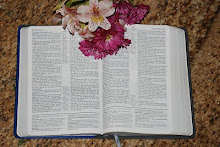
You never know when I might play a wild card on you!


Today's Wild Card author is:


and the book:


Summer Dream

Realms (June 7, 2011)

***Special thanks to Anna Coelho Silva | Publicity Coordinator, Charisma House | Charisma Media for sending me a review copy.***

ABOUT THE AUTHOR:


Martha Rogers is the author of Becoming Lucy; Morning for Dove; Finding Becky; Caroline’s Choice; Not on the Menu, a part of a novella collection with DiAnn Mills, Janice Thompson, and Kathleen Y’Barbo; and River Walk Christmas, a novella collection with Beth Goddard, Lynette Sowell, and Kathleen Y’Barbo. A former schoolteacher and English instructor, she has a master’s degree in education and lives with her husband in Houston, Texas.


Visit the author's website.

SHORT BOOK DESCRIPTION:

This is a new series by Martha Rogers.

“Summer Dream is a sweet, heartfelt, and well-written story about faith in action and a love that never fails. I can't wait to read the rest of this series.”—Andrea Boeshaar, author of Unexpected Love and Undaunted Faith

A Heart in Need of Redemption. An Unlikely Love. And a God Who Can Bring Them Together.

As the daughter of a small-town minister in Connecticut, Rachel Winston fears that the only way she’ll ever find a husband is to visit her aunt in Boston for the social season. But when Nathan Reed arrives in town, she can’t help but wonder if he could be the one.

Although attracted to Rachel, Nathan has no desire to become involved with a Christian after experiences with his own family. What’s more, until he resolves his anger with God and his family, he has no chance of courting her.

When Nathan is caught in a devastating blizzard and lies near death in the Winston home, Rachel and her mother give him a lesson in love and forgiveness that leads him back to his home in the South. Will he make peace with his family and return before Rachel chooses a path that takes her away from him?


Product Details:

List Price: $13.99
Paperback: 304 pages
Publisher: Realms (June 7, 2011)
Language: English
ISBN-10: 1616383607
ISBN-13: 978-1616383602

AND NOW...THE FIRST CHAPTER:


Briar Ridge, Connecticut, February 5, 1888

Why did Papa have to be so stubborn? Rachel Winston stared at the gray clouds outside her window and fought the urge to stomp her foot like a spoiled child. However, young women of twenty years must behave as befitting their age, as Mama so often reminded her. Perhaps she should have shown the letter to her mother first. Too late for that now; Papa would tell Mama as soon as he had the opportunity.

The back door closed with a thud, and Rachel shuddered. Papa had left for the church. His departing meant she needed to finish dressing or she’d be late, and then Papa would be even more upset with her. It wouldn’t do for the preacher’s family to be late for the services.

The paper in her pocket crackled when she moved toward the bed to retrieve her boots. Rachel fingered the crumpled edges of Aunt Mabel’s letter. There was no need to read it again, for she knew the words by heart. Her aunt’s invitation to come to Boston for an extended visit had arrived at a most inopportune time with the winter weather in the northern states at its worst. Even so, she shared the letter with Papa, hoping he might be agreeable to the visit.

A metallic taste soured her mouth, and she swallowed hard in an attempt to squelch it. Papa argued that the unpredictable weather of February made travel from Connecticut to Boston dangerous. If only one of the many Boston trains came to Briar Ridge. Aunt Mabel meant well, but her timing left something to be desired. Papa didn’t even want her going to Hartford or Manchester to board a train. It took over three hours by horseback to make the journey to Hartford—longer in bad weather.

She grasped the wrinkled letter in her hand and pulled it from its resting place. “Oh, Auntie, why did you wait until now to invite me for a visit?” she said to the letter, as if Aunt Mabel could hear her. “Last spring when I graduated from the academy would have been perfect, but you had to travel abroad.” A deep sigh filled her, then escaped in a long breath and a slump of her shoulders.

Aunt Mabel believed that a young woman should go to finishing school before she thought of marriage and had offered to pay for Rachel’s tuition. Papa had frowned on the idea, but her mother finally prevailed. For that, Rachel was most grateful, and she wouldn’t have traded those years at the academy for marriage to anyone. But now that she was twenty, she found that the pool of eligible bachelors in her area was slim to nonexistent.

Going to Boston would have provided the opportunity to meet more young men.

Rachel sat on the bed to ease off her slippers and bent over for the winter boots thatwould protect her feet from the slush. The frozen ground outdoors called for them, but they were not the choice she would have liked to wear to church this morning. Rachel shoved her feet down into the sturdy boots designed for warmth, not attractive appearance.

Of the eligible young men in Briar Ridge, only one came to mind, but then Daniel Monroe didn’t count. His sister had been Rachel’s best friend since Papa came to be pastor of the Briar Ridge church nearly seventeen years ago. Daniel treated her more like his sister anyway. Two years older, and just starting out as a lawyer, he was far more knowledgeable than she, and keeping up a conversation with him took more effort than she deemed it to be worth. Rachel had finished at the seminary with good marks, but Daniel’s conversation interests leaned more toward science and new inventions like electricity and the telephone than things of interest to her.
Rachel’s anger subsided as she pulled on the laces of her boots. As she reflected on her father, she remembered that he loved her and wanted only the best for her. He had promised that when spring came, he’d talk to her about the trip. Until then she would be the obedient daughter he wanted her to be and dream of the trip ahead. The Lord would give her patience, even though that was not one of her virtues.

She smoothed her skirt down over her hips and picked up the letter to place it on the table beside her bed. A response to Aunt Mabel would go out with tomorrow’s mail to express her regrets in not being able to accept the invitation. Papa would probably write to her as well, but Rachel wanted her aunt to know how much she appreciated the invitation.

If Seth were here now, he could give her good counsel. He’d always been the one she’d turned to when things didn’t go well with Mama and Papa. She loved her older brother and missed him, but he’d be home from the seminary in May, and she could talk with him then. Since he studied to be a minister like Papa, he’d most likely leave Briar Ridge if his ministry took him elsewhere after his graduation.

She’d met a few young men while at school, but the strict rules and regulations set forth at Bainbridge Academy for Young Women in Hartford had given her few opportunities to develop a relationship. Not that she would have considered any of them, but she would have appreciated the chance.
Mama called to her, and Rachel hurried to the front hall. She noted the firm set of Mama’s jaw and braced for the scolding that would be in order. “I’m sorry to take so long, Mama.” She grabbed her cloak from its hook.
“You know how your father hates for us to be late to church. It is unseemly for the minister’s family to be the last to arrive.” Mama turned and walked outside, her back ramrod straight.

Rachel breathed a sigh of relief. No time for a scolding now. She set a dark blue bonnet firmly over her hair and fastened the ties. She followed her mother out to the carriage, where the rest of the family waited. As usual, Papa had gone on ahead to open the church and stoke the two stoves to provide heat on this cold winter morning. Rachel climbed up beside her sister, Miriam, and reached for the blanket.

“What delayed you, Rachel? There’s no excuse for not being ready with everyone else.” Mama settled in her seat beside Noah, who had taken over his brother’s responsibilities until his own departure for college next fall.
“Time slipped away from me.” No need to tell her everything now. Rachel tucked a blanket around her legs and glanced at Miriam beside her. Miriam’s eyebrows lifted in question, but Rachel shook her head.

Micah piped up from the front seat. “Did you make Papa angry?”

“Micah! Of course not.” Rachel glanced at her brother Noah and noted the smirk on his face. She frowned to let him know she didn’t approve.
His gaze slid to her now. “Oh, then why did he stomp through the kitchen and ride off without a word to anybody?”

Mama clucked her tongue. “Now, children, it’s the Sabbath. Papa was late and in a hurry to get to the church.” But the look in Mama’s eyes promised she’d speak to Rachel about it later, especially after Mama learned the real reason for the tardiness.

Even though his decision disappointed her, Papa simply wanted to protect her from danger. She should be grateful for his love and concern, not angry because he said no. The promise of a trip to Boston when the weather improved would have to be enough to get her through the remainder of winter.

A recent snowfall still covered the frozen ground. Most of it in the streets had melted into a hodgepodge of brown and black slush caused by carriages and buggies winding their way toward the church. Rachel breathed deeply of the clean, fresh air that seemed to accompany snow in winter and rain in the spring.
If not for the inconveniences caused by ice and snow, she would love this time of year, even when the leafless branches of the trees cracked and creaked with a coating of ice. She gazed toward the gray skies that promised more snow before the day ended. If it would wait until later in the day, she might manage a visit with her best friend Abigail this afternoon.
However, a warm house, a cup of hot tea flavored with mint from Mama’s herb garden, and a good book might entice her to stay home on this cold, winter afternoon. Tomorrow would bring the chores of keeping the woodpile stocked and the laundry cleaned. She enjoyed the winter months, although this year she wished them to hurry by.

Miriam snuggled closer. Rachel smiled at her sister, who had recently turned thirteen. “I see you’re wearing your Christmas dress today. Is there a special occasion?”
Miriam’s cheeks turned a darker shade of red. “Um, not exactly.”

“Then what is it . . . exactly?”
Miriam tilted her head to one side and peered up at Rachel. She whispered, “Jimmy Turner.”
So her little sister had begun to notice boys. “Well now, I think he’s a handsome lad. Has he shown an interest in you?”

Miriam nodded and giggled. Rachel wrapped an arm around her sister as the buggy slowed to enter the churchyard. She stepped down onto the snow-covered ground muddied by all the wagons crossing over it. Now she was thankful for the thick stockings and shoes she wore to protect her toes. She then reached up for Micah while Miriam raced ahead.

The little boy pushed her hands away. “I can get down by myself.”

Rachel couldn’t resist the temptation to laugh. At seven, her younger brother expressed his independence and insisted on doing things for himself. He jumped with his feet square in a pile of snow and looked first at his feet then up to Rachel. She shook her head and grabbed his hand to go inside the building. How that little boy loved the snow. He’d be out in it all day if Mama would let him.

When she entered the foyer with Micah, she spotted Miriam already sitting in their pew with Jimmy Turner in the row behind her. Rachel hastened to sit down beside her sister. Miriam stared straight ahead but twisted her hands together in her lap.

When had Miriam grown up? Even now she showed signs of the beauty she would one day be. Thick, dark lashes framed her brown eyes, and her cheeks held a natural pink glow. Papa would really have to keep an eye out for his younger daughter.
Rachel glanced around the assembly room and once again admired the beauty of the old church built not long after the turn of the century. Instead of the quarry stone and masonry of the churches in Boston and even New Haven, Briar Ridge’s church walls were of white clapboard with large stained-glass windows along the sides. On bright days, sunlight streamed through them to create patterns of color across the congregation.

Brass light fixtures hung from the high vaulted ceilings, and the flames from the gaslights danced in the breeze as the back doors opened to admit worshippers. As much as she loved her church here in Briar Ridge, she remembered the electric lights she’d enjoyed in Hartford, one of the first cities to have its own generating plant. How long before electricity would become as widespread in Briar Ridge as it was in the larger cities? Probably awhile since Briar Ridge wasn’t known for its progress.
When the family first came to town, Rachel had been three years old, so this was the only home and church she could remember before leaving for school. Familiar faces met her everywhere she gazed. A nod and smile greeted each one as she searched for her friend Abigail and the Monroe family.
Unexpectedly a new face came into view a few rows back. A young man with the most incredible brown eyes stared back at her. Rachel’s breath caught in her throat, and the heat rose in her cheeks.

She felt her mother’s hand on her arm. “Turn around, Rachel. It’s not polite to stare.”
With her heart threatening to jump right out of her chest, Rachel tore her gaze away from the stranger seated with the Monroe family. Papa entered from the side door and stepped up to the pulpit. The service began with singing, but Rachel could barely make a sound. Everything in her wanted to turn and gaze again at the mysterious person with the Monroe family, but that behavior would be unseemly for the daughter of the minister.

However, her thoughts refused to obey and skipped to their own rhythm. Rachel decided that whoever he was, he must be a friend of Daniel’s because Abigail had never mentioned any man of interest in her own life. In a town like Briar Ridge, everyone knew everyone’s business. She hadn’t heard any talk of a guest from Daniel or her other friends yesterday.
A prickling sensation crept along her neck as though someone watched her. She blinked her eyes and willed herself to look at Papa and concentrate on his message. However, her mind filled with images of the young man. Who was this stranger who had come to Briar Ridge?

Nathan Reed contemplated the dark curls peeking from beneath the blue bonnet. When she had turned and their eyes met, his heart leaped. He had never expected to see such a beauty in a town like Briar Ridge. His friend Daniel’s sister was attractive, but nothing like this raven-haired girl with blue eyes.
When she turned her head back toward the front, he stared at her back as if to will her to turn his way again. When she didn’t, he turned his sights to gaze around the church, so much like others he’d once attended. He wouldn’t be here this morning except out of politeness for the Monroe family. He’d arrived later than intended last evening and welcomed Mrs. Monroe’s offer to stay the night with them. The least he could do was attend the service today.

Nathan had no use for church or things of God. He believed God existed, but only for people who needed something or someone to lean on. God had forsaken the Reed family years ago, and Nathan had done quite well without any help these four years away from home.

He shook off thoughts of the past and concentrated once more on the blue bonnet several rows ahead. Perhaps Daniel would introduce him. She would be a nice diversion from the business he must attend to while in town. He blocked the words of the minister from his mind and concentrated on the girl’s back.
The little boy seated next to the young woman seemed restless, so she lifted him onto her lap. The child couldn’t be her son. She didn’t look old enough. Then the older woman next to them reached for the boy and settled him in her arms. In a few minutes the boy’s head nodded in sleep.
Nathan resisted the urge to pull his watch from his pocket and check the time. Surely the service would end soon. Potbellied stoves in the front and back of the church provided warmth, and the additional heat of so many bodies caused him to wish he had shed his coat. He fought the urge to nod off himself. Oh, to be like the young lad in his mother’s arms.
Finally the congregation rose, and the organ played the final hymn. It was none too soon for Nathan, for he had grown more uncomfortable by the minute. Long sermons only added to his distaste for affairs of the church. The singing ended and people began their exit, but he kept his eye on the girl in blue until the crowd blocked her from view.

He stayed behind the Monroe family, who stopped to greet the minister. Mrs. Monroe turned to Nathan. “Reverend Winston, this is Nathan Reed, our houseguest from Hartford this week and a friend of Daniel’s.”

The minister smiled in greeting and shook Nathan’s hand. “It’s very nice to have you in our services today, Mr. Reed. I hope you enjoy your stay in Briar Ridge and that we’ll see more of you.”

“Thank you, sir. I look forward to my visit here.” But the minister wouldn’t be seeing any more of him unless they possibly met in town.

When they reached the Monroe carriage, Nathan turned and spotted the girl coming down the steps. He watched as Daniel waved to the young woman and she waved back. Abigail ran to greet her, and the girls hurried over to where Nathan stood with Daniel. Abigail tucked her hand in the girl’s elbow.
“Nathan, this is my best friend, Rachel Winston. Rachel, this is Daniel’s former roommate in college, Nathan Reed.”

Rachel Winston? Nathan’s hopes dashed against the slushy ground on which he stood. Could she be the preacher’s daughter? He didn’t mind a young woman being Christian, but he drew the line at keeping company with one so close to the ministry.
When her blue eyes gazed into his, a spark of interest flamed, and it took him a few seconds before remembering his manners. “It’s a pleasure to meet you, Miss Winston.”
Her cheeks flushed red, and she glanced away slightly but still smiled. “Thank you. I’m pleased to meet you too, Mr. Reed. Perhaps we’ll see each other again if you’re in town long.”

Rachel’s smile sent a warmth into his heart that caused him to swallow hard. Although the length of his stay was uncertain, his desire to see the lovely Miss Winston again might just override his pledge to avoid anything or anyone with ties to the church.


Happy Reading,